Layering Up: How to Dress for The Cold-Weather
Learn the three-layer clothing system for hiking and backpacking. Discover the best base layers, insulation, and waterproof shells for cold weather.
The essential guide to staying warm, dry, and comfortable while hiking, backpacking, and exploring the outdoors.
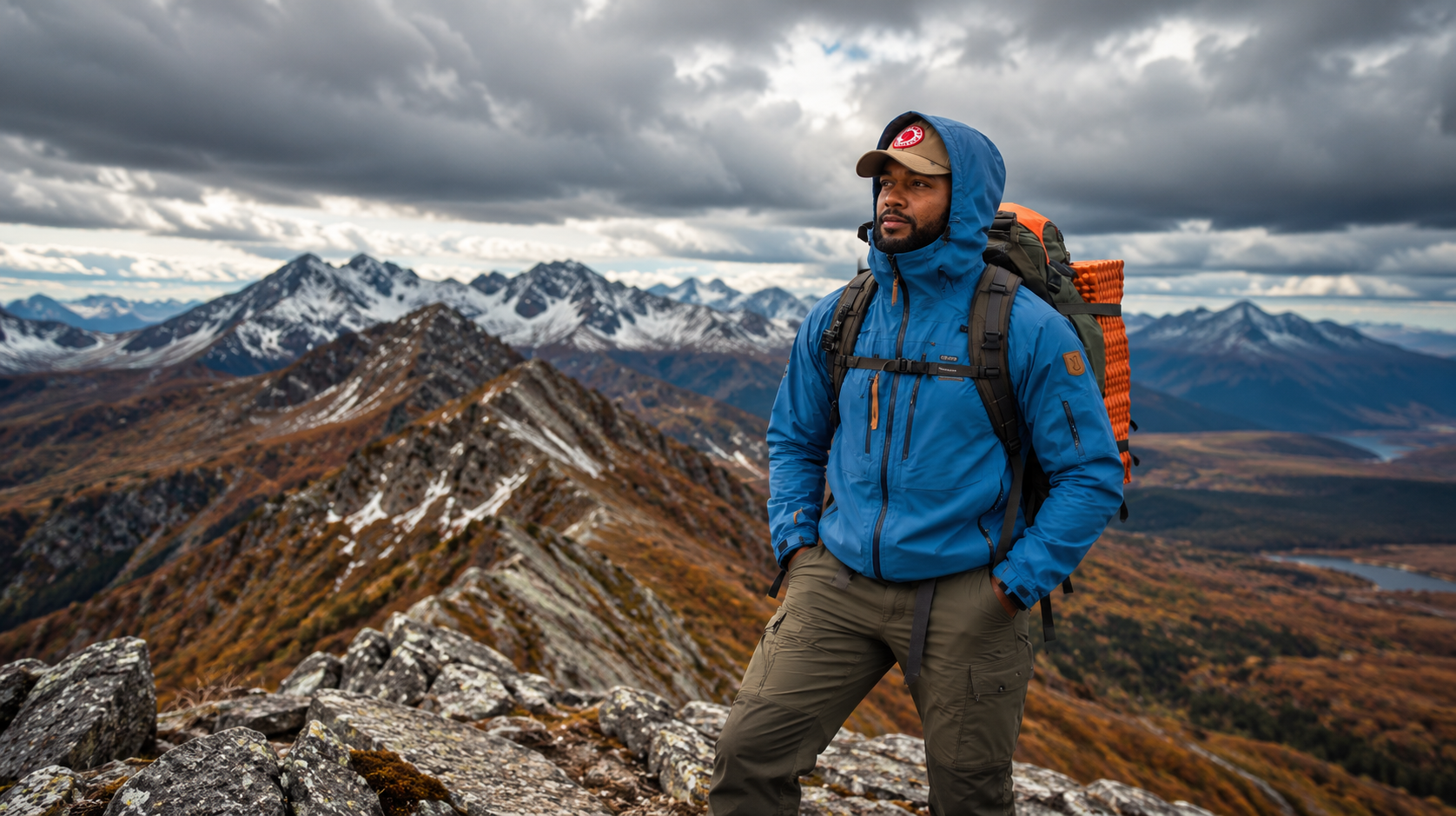
When heading into the backcountry, the weather can change in a matter of minutes. A sunny morning can quickly turn into a cold, windy afternoon, and a comfortable hike can become miserable if you're not dressed appropriately. Whether you're backpacking through the mountains, camping in the wilderness, or exploring a national park, knowing how to layer your clothing is an essential outdoor skill.
The secret to staying comfortable outdoors isn't necessarily wearing the thickest jacket you own. Instead, it's understanding how to combine different clothing layers to regulate body temperature, manage moisture, and protect yourself from the elements.
In this guide, we'll break down the fundamentals of the three-layer clothing system, explain the materials that work best, and share practical tips for staying comfortable during your next adventure.
Understanding the 3-Layer System
The layering system consists of three primary components: a base layer, an insulating mid-layer, and a protective outer layer. Each serves a specific purpose, and together they create a versatile clothing system that can adapt to changing weather conditions.
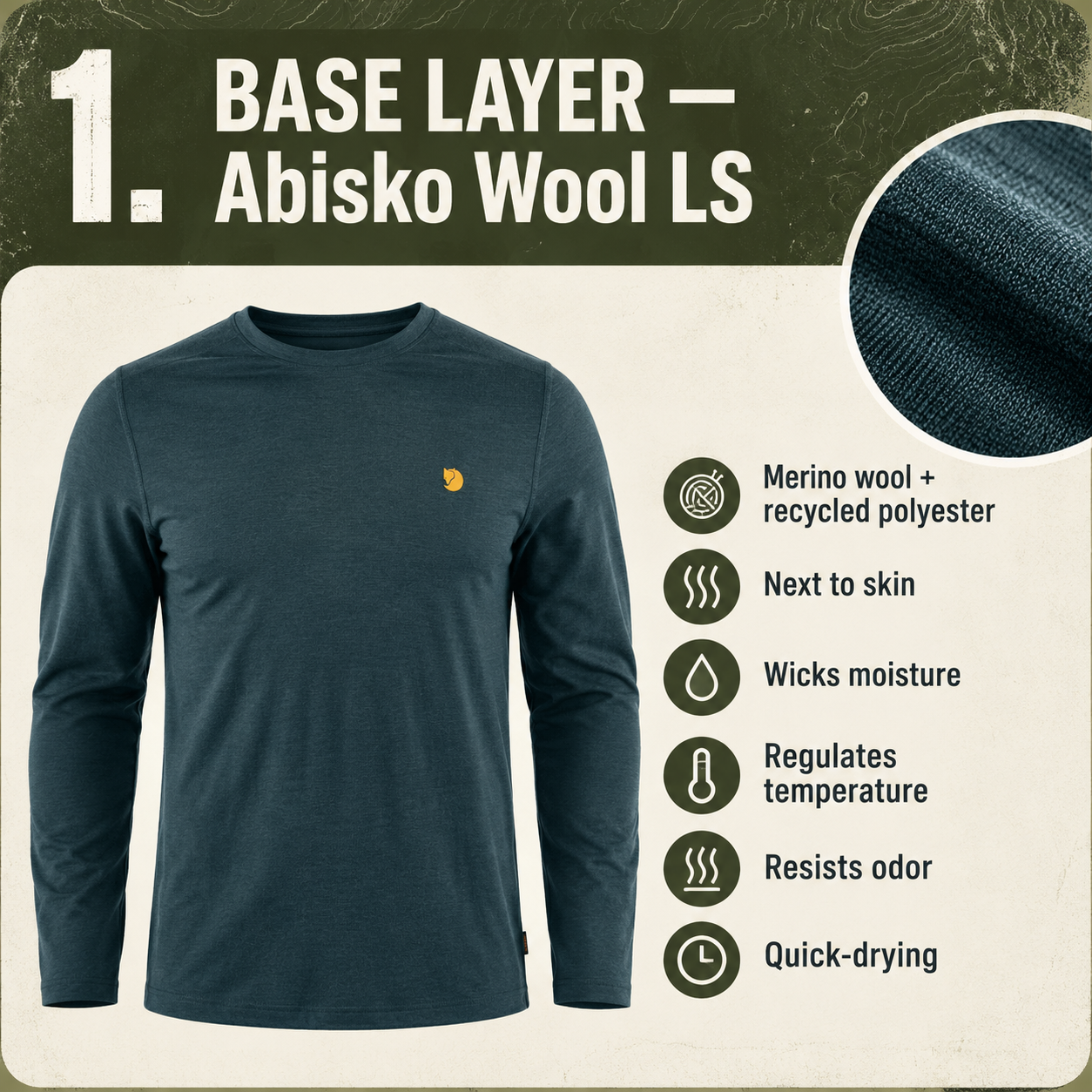
1. Base Layer — Moisture Management
The base layer sits directly against your skin and plays an important role in managing moisture. While hiking, your body generates heat and produces sweat, even in cold temperatures.
If that moisture remains trapped against your skin, it can accelerate heat loss when you slow down or stop moving.
A good base layer helps transport moisture away from your skin so it can evaporate or move into the next clothing layer.
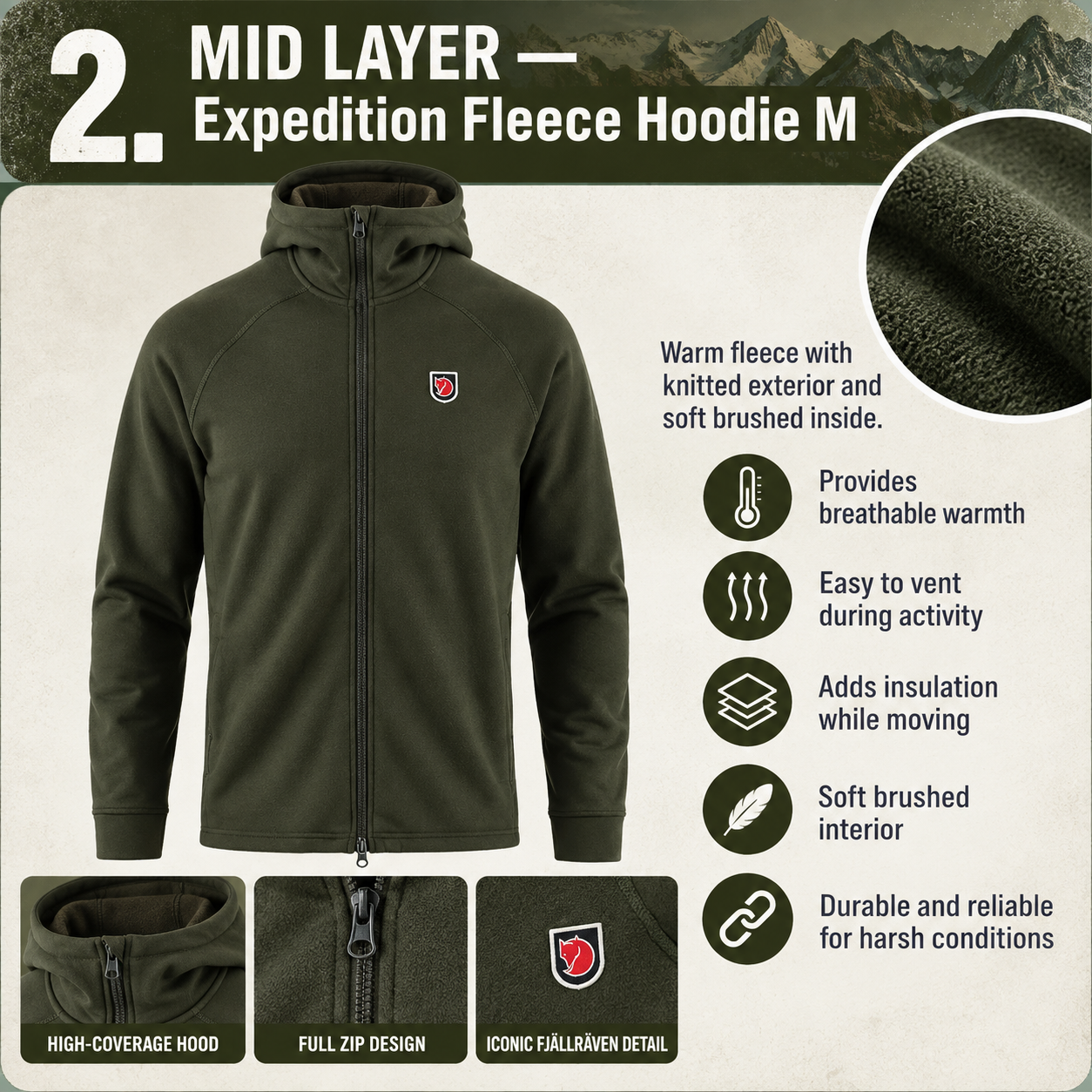
2. Mid-Layer — Insulation
The purpose of the mid-layer is to retain body heat by trapping air within its fibers or insulation. Depending on the temperature and your activity level, this layer might be a lightweight fleece, a synthetic insulated jacket, or a down jacket.
For strenuous hiking, a lightweight fleece is often an excellent choice because it provides moderate insulation while allowing excess heat to escape.
Down jackets, on the other hand, are particularly useful when you stop moving. They offer substantial warmth without taking up much space in your backpack.
Backcountry tip: Keep an insulated jacket easily accessible in your pack. When you stop for lunch or reach camp, put it on before your body begins cooling down.

3. Outer Layer — Weather Protection
Your outer layer, sometimes called a shell, protects you from environmental conditions such as wind, rain, and snow.
Even with excellent insulation, strong winds can remove heat from your body, while rain can saturate clothing and reduce its insulating performance.
Although waterproof-breathable fabrics allow some moisture vapor to escape, they cannot eliminate sweating. During strenuous activity, opening ventilation zippers or reducing insulation may be necessary to prevent overheating.
How to Layer for Different Weather Conditions
One of the most important aspects of layering is understanding that your clothing system should change depending on the environment.
The following examples are starting points rather than strict rules. Wind, precipitation, sun exposure, and your personal tolerance for cold can all influence what you need.
Conditions Suggested layering
Mild and cool (45–60°F) Lightweight base layer; wind shell if needed
Chilly (35–45°F) Base layer + fleece; shell as conditions require
Cold (20–35°F) Warmer base layer + insulating mid-layer + weather shell
Below 20°F Cold-weather base layers + substantial insulation + protective shell, with additional insulation for rest stops
These examples assume you are actively hiking. Standing around camp, photographing wildlife, or sitting during a lunch break generally requires more insulation than walking uphill with a loaded backpack.
Extremely cold environments may require additional layers and specialized equipment.
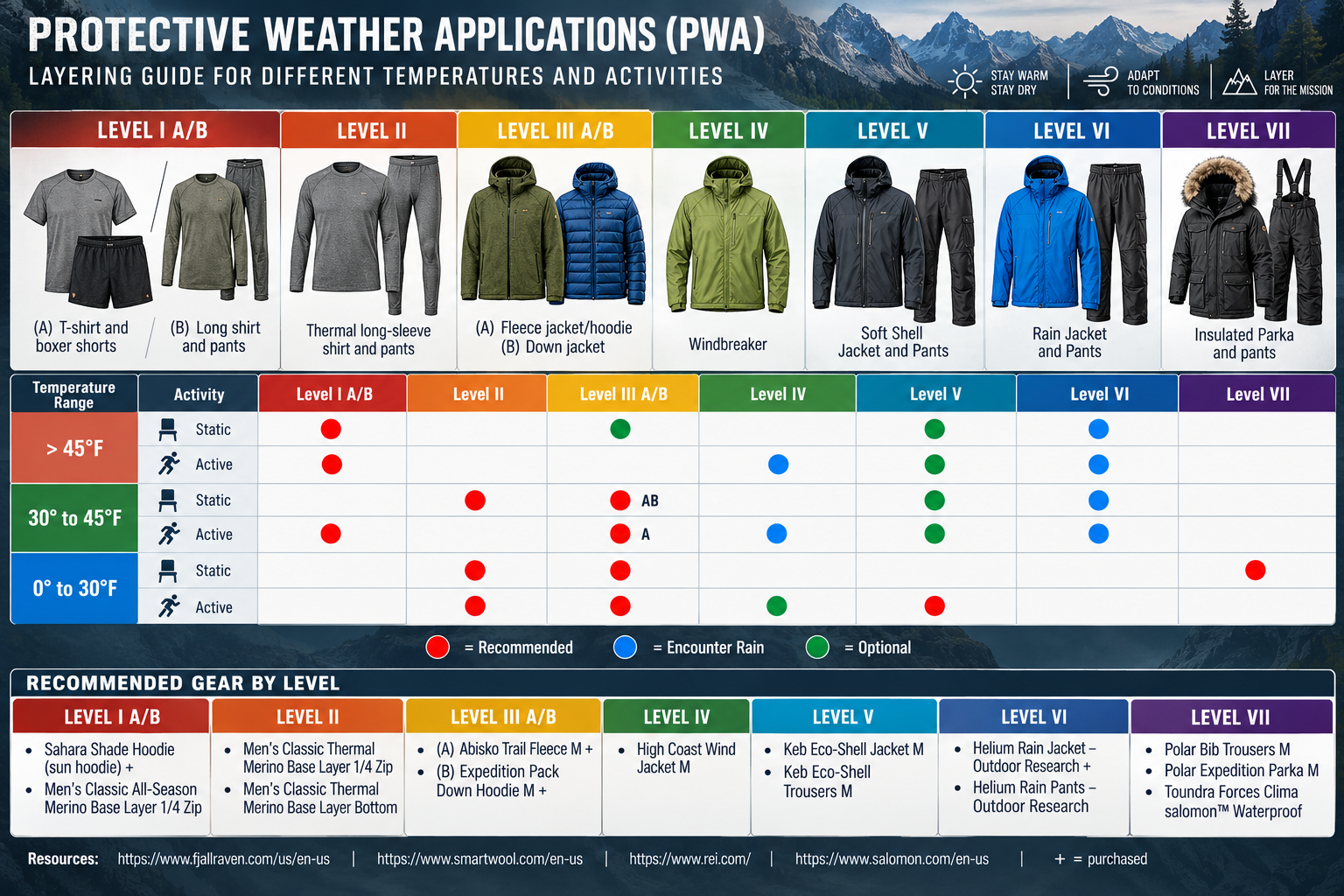
Protective Weather Applications (PWA)
This chart is a refence point created to help plan for the weather and cold.
Avoiding the Most Common Layering Mistakes
Avoid cotton: Cotton holds moisture and dries slowly, increasing the risk of chilling in cold conditions.
-
Even experienced hikers can make mistakes when dressing for cold weather. One of the most common is wearing too much clothing at the beginning of a hike.
When you first step onto the trail, you may feel chilly. However, as your muscles begin working, your body generates additional heat.
If you're wearing too many layers, you can quickly begin sweating. Once you stop moving, that moisture may cause you to cool down rapidly.
-
Even the best layering system requires adjustments to release excess heat.
-
Having dry socks and an insulating layer can make a major difference after a long day in wet conditions.
-
Wearing layers that are too tight can reduce the air space that provides warmth.
-
A warm jacket won't compensate for inadequate gloves, socks, or head protection.
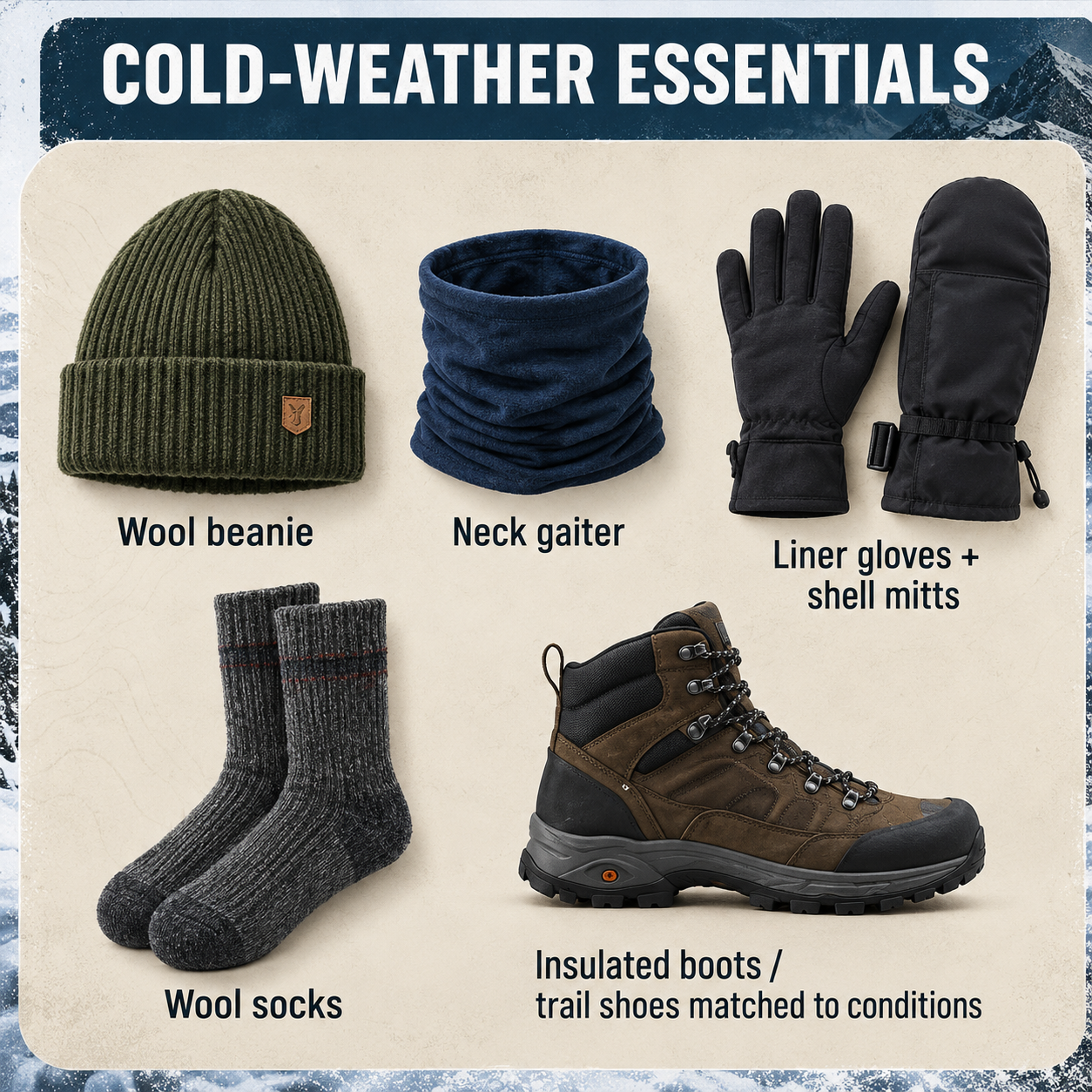
Don't Forget Your Hands, Feet, and Head.
While most discussions about layering focus on jackets and shirts, protecting your extremities is equally important.
For your hands, consider lightweight liner gloves combined with insulated or waterproof gloves depending on the conditions.
For your feet, moisture-wicking wool or synthetic socks are excellent options. Make sure your boots provide enough room for your toes to move, since overly tight footwear can restrict circulation and contribute to cold feet.
A warm beanie or insulated hood helps reduce heat loss from your head, especially when you're exposed to wind.
In freezing temperatures, pay attention to early signs of frostbite, including numbness, unusual skin color, or hard, waxy skin. Seek shelter and appropriate care if these symptoms develop.
Before heading into the backcountry, review the weather forecast and consider how conditions might change throughout the day.
A hike that begins in a sheltered forest could eventually lead to an exposed mountain ridge where wind speeds are much higher. Likewise, a warm afternoon can quickly transition into a cold evening once the sun sets. Pack your clothing with accessibility in mind. Your rain shell and extra insulation should be easy to retrieve without unpacking your entire backpack.
As you hike, regularly assess how your body feels. If you're beginning to sweat, remove a layer or open your jacket's ventilation. If you're slowing down or preparing to stop, add insulation before becoming chilled. Remember that layering isn't about wearing all three layers at once. It's about having the right clothing available and knowing when to use it.